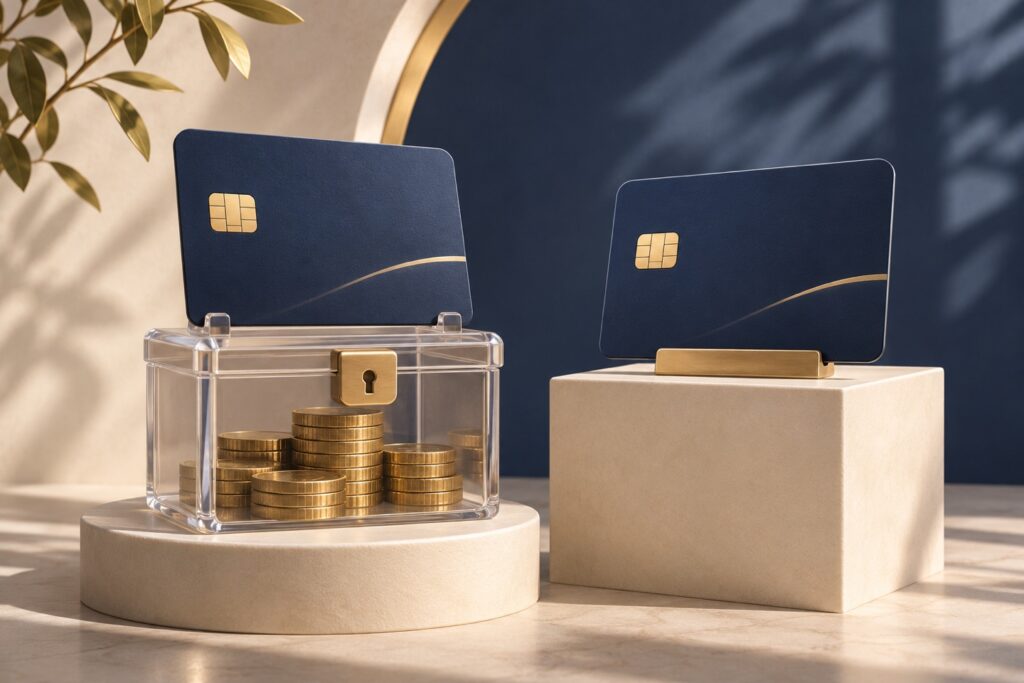
A secured credit card requires a security deposit under its terms; an unsecured card generally does not. Both require responsible payments. A deposit is not a prepaid payment toward every purchase, and neither card type guarantees approval or a score increase.
Key takeaways
- A secured card requires a refundable deposit; an unsecured card does not — both need on-time payments.
- Compare the full cash commitment: deposit, fees, APR and the limit you will actually get.
- Confirm the card reports to the major credit bureaus and is a true credit card, not a prepaid card.
Compare the full cash commitment
List the deposit, annual fee, other charges and available limit. Check the interest rate and grace-period terms. Money tied up as a deposit is money you cannot use for an upcoming bill. Avoid choosing a larger deposit if it makes your ordinary expenses unaffordable.
Ask how the account will be reported
Confirm which major credit bureaus receive account information and whether the product is actually a credit card rather than a prepaid card. Ask about eligibility, the application inquiry and any process for returning the deposit or moving to another product. Read the written terms instead of relying on an advertisement saying “build credit fast.”
Practice before you apply
Choose a small planned expense and write out how you would repay it. For example, a hypothetical $30 recurring bill fits only if the $30 and all other required expenses are already covered. The purchase is not an extra $30 of income. Schedule a reminder to review the statement, not merely an alert when a purchase occurs.
- Know the payment due date and statement closing date.
- Review the statement balance and minimum payment.
- Check that any AutoPay actually processes.
- Keep spending within an amount you can repay.
A useful first account is one whose terms you understand and can maintain. If you cannot fund the deposit and payments comfortably, pause and build room in the budget. Opening several accounts to compensate for a limited history adds obligations before you have tested the first routine.
Frequently asked questions
Does a secured credit card build credit?
Yes, if the issuer reports to the credit bureaus and you pay on time. The CFPB lists secured cards among common ways to start building credit.
Do I get my secured card deposit back?
Usually, when you close the account in good standing or the issuer upgrades you to an unsecured card. Check the written terms for when and how.
Is a prepaid card the same as a secured card?
No. Prepaid cards use your own money and generally are not reported to the credit bureaus, so they do not build credit history.
Related reading
- Your First U.S. Credit Account: A Practical 90-Day Starting Plan
- No Credit History vs. Bad Credit: Choose the Right Starting Plan
Sources and further reading
Recommended reading from Mani Hatami
- Credit for a New Life: A Beginner’s Guide for Immigrants in America — a plain-language introduction to the U.S. credit system: starting a credit history, reading scores and making informed borrowing decisions.
- Credit First, Success Next: Build the Foundation of Your American Dream — how to build the credit foundation behind bigger goals such as renting, buying a car or owning a home.
- Reading in Persian? See Mani’s Persian credit books, including Credit 101 (101 practical lessons for improving your credit score), or download the free Farsi credit e-book.
Have a question about your own credit? Contact Mani. سوالی دارید؟ به فارسی با ما صحبت کنید.
By Mani Hatami. Reviewed November 6, 2026. Educational information, not individualized financial, legal or tax advice. Examples are hypothetical; results and product terms vary.
This article was originally published on November 6, 2026. Information may have changed. Discuss your current circumstances before making financial decisions.