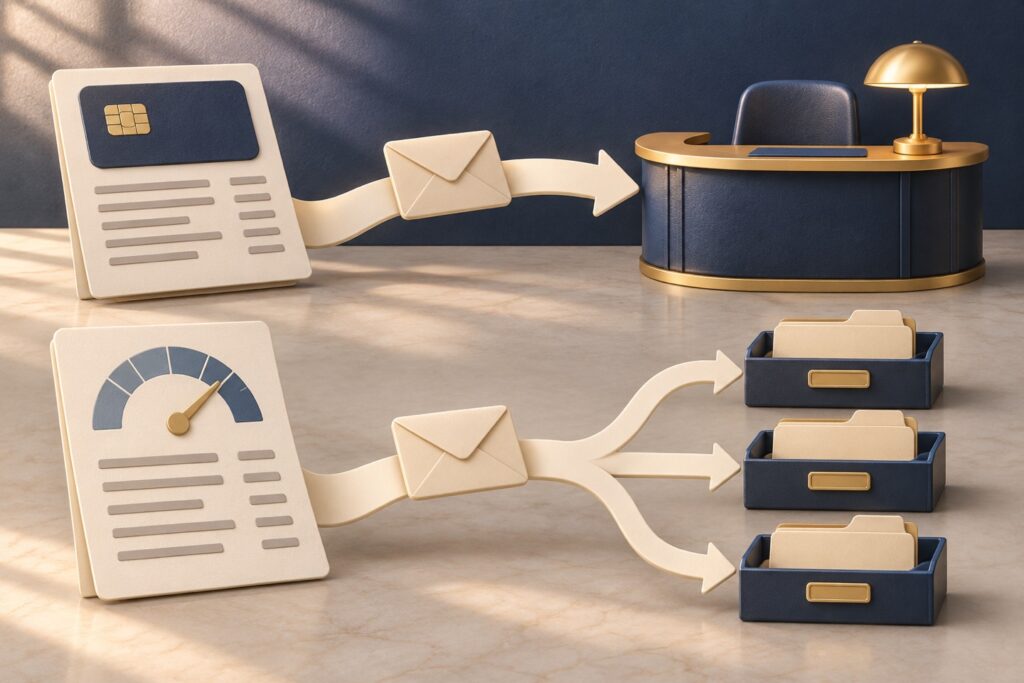
An incorrect charge on a card bill and an incorrect account entry on a credit report can require different procedures. Reporting one problem to a bureau does not automatically complete an issuer’s billing-error process. Identify where the error appears.
Key takeaways
- A wrong charge on your card bill and a wrong entry on your credit report follow different dispute routes.
- Billing errors go to the card issuer in writing within 60 days of the first statement showing the error.
- Credit report errors go to the bureau and the company that reported the information — keep separate files for each.
For a billing error, contact the issuer promptly
Make sure your written billing-error notice reaches the issuer within 60 days after it sent the first statement showing the error; follow the official instructions promptly. Use the address designated for billing disputes, which may differ from the payment address, and retain proof of delivery. Contact the company promptly and review the official instructions for your circumstances.
For a report error, identify the reported field
A wrong balance, ownership designation or payment status calls for the relevant report and supporting records. Dispute the inaccurate information with the bureau and information furnisher through appropriate channels. The bureau’s investigation timeline is a separate process from a card billing dispute.
When both are involved
Imagine a hypothetical duplicate purchase charge that also contributes to an inaccurate reported balance. Keep a billing file and a report file, with separate submission dates and references. Explain the connection, but do not assume one recipient handles every part.
- Save the first statement showing the error.
- Record the date and bureau of any inaccurate report.
- Send a precise explanation and relevant copies.
- Keep confirmations and response deadlines.
- Review corrected statements and reports separately.
Do not assume a dispute cancels all payment obligations. CFPB explains that correct, undisputed charges remain payable on time while a qualifying billing dispute is investigated. Ask about account-specific instructions, and seek qualified help if legal rights or a deadline are unclear. Act promptly rather than waiting for a score app to change.
Frequently asked questions
How do I dispute a charge on my credit card bill?
Send a written billing-error notice to the issuer’s billing-dispute address so it arrives within 60 days after the first statement showing the error. The CFPB explains the steps.
Do I still have to pay my card while a charge is disputed?
You generally do not have to pay the disputed amount during the investigation, but you must keep paying the correct, undisputed part of your bill on time.
Does disputing a credit report error also fix my card bill?
No. A bureau dispute addresses what is reported; it does not complete the issuer’s billing-error process. If both are affected, file both.
Related reading
- How to Prepare a Credit Report Dispute: An Evidence-First Workflow
- Charged After Canceling a Subscription? Preserve the Confirmation and Check the Bill
Sources and further reading
Recommended reading from Mani Hatami
- Credit for a New Life: A Beginner’s Guide for Immigrants in America — a plain-language introduction to the U.S. credit system: starting a credit history, reading scores and making informed borrowing decisions.
- Credit First, Success Next: Build the Foundation of Your American Dream — how to build the credit foundation behind bigger goals such as renting, buying a car or owning a home.
- Reading in Persian? See Mani’s Persian credit books, including Credit 101 (101 practical lessons for improving your credit score), or download the free Farsi credit e-book.
Have a question about your own credit? Contact Mani. سوالی دارید؟ به فارسی با ما صحبت کنید.
By Mani Hatami. Reviewed November 6, 2026. Educational information, not individualized financial, legal or tax advice. Examples are hypothetical; terms and outcomes vary.
This article was originally published on November 6, 2026. Information may have changed. Discuss your current circumstances before making financial decisions.